


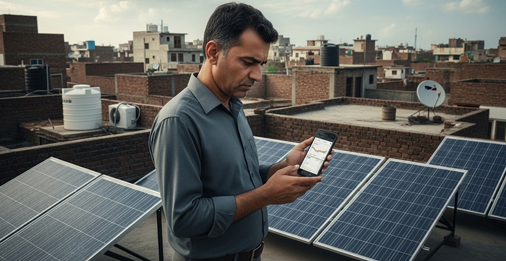
“Every policy change has winners and losers.” The recently published Prosumer Regulations by NEPRA on February 9, 2026, appear to have caused far more losses than gains in Pakistan’s solar energy sector. These Prosumer Regulations, which replaced the 2015 net metering legislation, have had a nationwide impact by drastically reducing the rate at which excess solar energy is being purchased.
The consequences could not be more dire, given Pakistan’s 6,000 MW of rooftop solar capacity and more than 466,000 solar consumers. You may learn more about what happened, why it matters, and what to do next from this blog article.
What Are the NEPRA Prosumer Regulations 2026?
The NEPRA (Prosumer) Regulations, 2026, notified through SRO 251(I)/2026, have been enforced from February 9, 2026. These regulations apply to all solar, wind, and biogas-based distributed generation units up to 1 MW capacity, which are connected to the distribution network in Pakistan via licensed DISCOs.
The term “prosumer” refers to a three-phase or 11kV domestic, commercial, or industrial consumer who is also a producer of electricity and injects it into the grid. These regulations have repealed the ARE&NM Regulations 2015, which were introduced a decade ago and gave birth to the rooftop solar sector in Pakistan.
For a detailed overview, check out A Complete Guide to Net Metering Policy in 2026 For Solar Users.
Net Metering vs. Net Billing: What Changed?
The biggest shift under the new NEPRA net metering framework is the move from net metering to net billing.
Old Net Metering (2015)
Under the previous regime, for each unit of solar electricity fed into the national grid, you were compensated at the same rate at which you were charged for the use of grid electricity. This direct compensation resulted in many Pakistani households with bigger solar power systems getting free electricity bills every month, with some even getting money back from the DISCOs quarterly.
Learn how to track your usage via A Complete Guide On How to Check Electricity Bill Online.
New Net Billing (2026)
In accordance with NEPRA’s new net metering laws, the DISCOs buy the extra solar electricity at the National Average Energy Purchase Price (NAEPP), which is approximately Rs. 11 per unit for new connections. Consumers must, however, pay the full rate of between Rs. 40 and Rs. 60 per unit for the power they take out of the grid. This significant rate differential has a direct impact on solar power’s return on investment.
For insight into updated tariffs, refer to Net Metering Rates in Pakistan (2025): Updated Tariffs, Rules & Solar Payback.
Key Changes at a Glance
Feature | Old (2015) | New (2026) |
Buyback Rate | Rs. 22 to Rs. 27 / unit | ~Rs. 11 / unit (NAEPP) |
Billing Model | One-to-one offset | Separate buy/sell rates |
Contract Term | 7 years | 5 years (renewable) |
Concurrence Fee | Not applicable | Rs. 1,000 per kW |
Why Did NEPRA Make This Move?
According to NEPRA, there are three primary reasons for the new NEPRA net metering rules. Firstly, solar power above 1 MW is now being purchased for less than Rs. 10 per unit, and the previous rate of Rs. 22 to 27 per unit for buying back the solar power is no longer economically viable. Secondly, with the addition of 6,000 MW of rooftop solar power, the possibility of overproduction during the winter season (when the total demand is 8,000 to 9,000 MW) is creating serious issues with respect to the stability of the national grid.
Thirdly, the government has stated that the cost of purchasing costly exported solar power was being shared with all 38 million consumers of the national grid, which was considered unfair to them.
Explore How Net Metering Can Make Your Solar Panels More Profitable for maximizing ROI under these rules.
Who Is Affected?
- Existing prosumers: After the direct intervention of PM Shehbaz Sharif, NEPRA has issued a draft amendment on February 16, 2026, which states that those consumers with valid net metering agreements as of February 9, 2026, will continue to enjoy their old rates until the expiration of the agreement. A 30-day public consultation period is currently open.
- Pending applications: Power Minister Awais Leghari has confirmed that 5,165 applications submitted before February 8, 2026, for 250.822 MW of capacity, will be considered for the old net metering policy.
- New applications: Those consumers applying for solar connectivity after February 9, 2026, will be completely governed by the new net billing policy, which includes the Rs. 11 per unit buyback tariff and all new charges.
Conclusion
The solar industry in Pakistan is at a crossroads. The NEPRA Prosumer Regulations 2026 signify a paradigm shift, which significantly diminishes the economic viability of rooftop solar for new consumers. Although it seems that existing prosumers are not affected at this stage, the writing is on the wall: the one-to-one net metering days in Pakistan are now behind us.
New customers must rework their ROI calculation with the new Rs. 11 per unit tariff rate for buying back their electricity and take battery storage seriously to achieve maximum self-consumption instead of feeding the grid. The more intelligent your system configuration, the better your returns under these new Prosumer Regulations.
Stay ahead of the rapidly evolving energy landscape in Pakistan. Visit our website to access the latest resources on solar investment plans, battery storage systems, and all that you need to know about making informed energy choices in 2026 and beyond.
Faqs
1. What are the Prosumer Regulations 2026 in Pakistan?
The NEPRA Prosumer Regulations 2026 are the new rules that replace Pakistan's 2015 net metering policy. They introduce net billing, a new buyback rate of approximately Rs. 11 per unit, and a five-year contract period for all new solar connections to the national grid.
2. Will the Prosumer Regulations affect my existing solar contract?
If you hold a valid net metering agreement signed before February 9, 2026, NEPRA's draft amendment proposes that your contract continue unchanged until its expiry date. Final confirmation depends on the result of the ongoing public consultation period.
3. What is the new buyback rate under the Prosumer Regulations NEPRA solar policy?
Under the new Prosumer Regulations, surplus solar electricity is purchased by DISCOs at the National Average Energy Purchase Price, currently around Rs. 11 per unit. This is roughly half of what most existing net metering consumers previously received, making the new rate a significant financial setback for solar investors in Pakistan.