


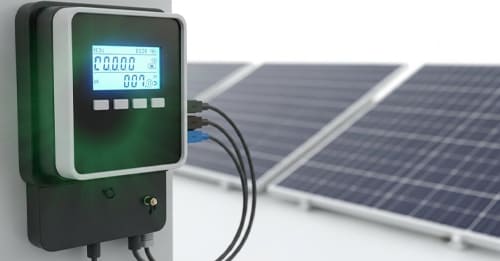
Rooftop solar has become one of the fastest-growing energy choices for homes and businesses, and its overall savings now depend heavily on the updated net metering rates in Pakistan. With thousands of new users seeking clarity after the 2025 policy changes, understanding how export tariffs, billing rules, and contract terms work has never been more important.
At Feroze Power, we help consumers make informed solar decisions based on real numbers and up-to-date regulations. The latest changes in net metering not only impact the monthly savings of new solar users but also redefine how homeowners and commercial consumers plan their long-term solar investment strategy in Pakistan.
What is Net Metering?
Net metering is the utility billing practice of recording the excess energy generated by a solar installation and applying it to the customer’s bill as credit toward energy drawn from the grid.
It’s a pretty straightforward way to compensate solar panel owners for their contributions, and it’s been the law in many places across Pakistan.
On 1st September 2015, NEPRA issued its net-metering regulations that allow the distribution companies in Pakistan to buy excess units of electricity produced by the consumers from their solar power, and net them off against the units consumed from the grid. As per these regulations, any customer of the national grid can avail a net-metering facility for small-scale (1kW to 1MW) renewable energy installations.
Net Metering in Pakistan: The 2025 Regulatory Change
1. Buyback Rate Cut to PKR 10 per Unit
- The Economic Coordination Committee (ECC) approved slashing the buyback rate for solar net-metering from PKR 27 to PKR 10 per unit for new consumers.
- This change is meant to reduce the financial burden on non-solar grid consumers.
- NEPRA has been given the authority to revise this rate periodically.
2. Contract Duration Limited to 5 Years
- Instead of long-term contracts, new net-metering agreements will now be limited to five years, after which their rate may be reviewed.
- This applies to new users; existing consumers usually continue their current contract terms until their expiry.
3. Billing Method Revised
- The new policy separates exported and imported electricity in billing. Exported units are bought at PKR 10/kWh, while imported units are billed at peak/off-peak rates.
- The “net billing/gross meter” concept is being introduced for new net-metering customers.
These regulatory updates make understanding the new net metering framework essential for maximizing savings and planning a cost-effective solar investment in Pakistan.
Net Metering Rates in Pakistan and Payback Time(2025)
A lower buyback rate has significantly altered the financial metrics for new solar investments in Pakistan, shifting the primary benefit of Net Metering in Pakistan away from earning compensation towards increasing self-consumption.
Consumer Status | Buyback Rate (Exported Energy) | Estimated Payback Period | Financial Strategy |
Existing Users (Valid License) | Approx. Rs 27 per unit (Protected) | 3–5 years | Maintain existing agreement (protected until expiration). |
New Applicants (2025) | Rs 10 per unit (Fixed Rate) | 10–12 years | Maximize daytime usage to offset consumption; minimize export. |
Commercial/Industrial | Rs 10–12 per unit | 7–10 years | Focus on load management (BESS) and maximizing self-consumption. |
As net metering rates in Pakistan undergo significant reform, an alternative strategy must be created that places emphasis on efficiency instead of revenue generation.
Strategy for Solar Panel Installation in Pakistan
Given the revised net metering rates in Pakistan, the feasibility of your project depends heavily on your consumption profile:
- Maximize Self-Consumption: Systems are most profitable when the energy is used instantly during daylight hours (e.g., air conditioning, industrial operations), minimizing the amount exported back to the grid for Rs 10.
- Battery Energy Storage Systems (BESS): Hybrid or off-grid systems utilizing Battery Energy Storage Systems become more appealing. They store surplus energy for evening use, ensuring you offset the expensive imported grid electricity.
- System Sizing: Oversizing your system to generate a massive surplus is no longer financially viable. Systems must be sized precisely to match the highest daytime load.
An effective solar plan ensures cost-efficiency, reducing your Solar Panel Installation Cost in Pakistan, tailored to fit your energy requirements.
Conclusion
The drastic adjustment to net metering rates in Pakistan represents a fundamental strategic shift; now the success of new solar installations depends entirely on maximizing self-consumption rather than selling extra energy back to the grid. To be effective, solar designers must employ efficient design practices with regard to efficiency and load management.
At Feroze Power, we suggest a balanced design approach combining optimized generation, reduced consumption, and strategic battery storage to successfully navigate this new regulatory era and ensure your solar investment pays off in the long run.
Faqs
Q1. How did the change in net metering rates in Pakistan affect the project payback period?
The reduced buyback rate has extended the estimated payback period for new residential solar systems from an estimated 3–5 years to an average of 10–12 years.
Q2. What is the optimal size solar system to use with net metering?
The majority of the homes have 5kW to 10kW systems. Businesses need bigger systems based on consumption. Professional evaluation by Feroze Power guarantees proper sizing.
Q3. Do I require net metering approval in Pakistan?
Yes. All users need approval from their corresponding DISCOs (IESCO, LESCO, KE, etc.).This covers inspection of the system, adherence to AEDB standards, and installation of meters.