


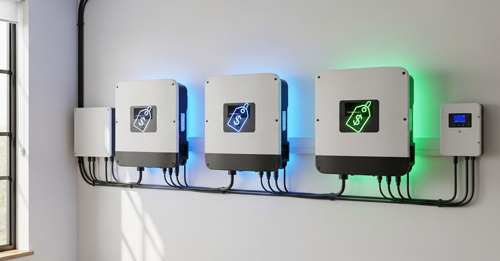
Solar inverters are essential components of any solar energy system, as they convert the direct current (DC) produced by solar panels into an alternating current (AC), suitable for home and business usage. Understanding different types of inverters available helps you select the best suited to meet your energy requirements and budget.
For detailed solar system planning and design before choosing an inverter, you can also explore Off-Grid Solar System: How It Works and Key Components.
What Are Solar Inverters and Why Are They Important
Solar inverters serve as the heart of any solar power system, coordinating power conversion, regulating voltage levels, protecting appliances, and monitoring performance. An inferior quality inverter may lead to power fluctuations, system inefficiency, or long-term equipment damage, resulting in unpredictable results and long-term equipment degradation.
In regions with unstable grids and frequent outages, the reliability of solar inverters becomes even more crucial. Therefore, choosing an appropriate one shouldn’t just be about price but should also take performance and durability into consideration.
Types of Solar Inverters
There are several types of solar inverters available in the market, each designed for different system requirements.
String Inverters
String inverters are commonly used in residential installations. Multiple solar panels are connected in series to a single inverter. These inverters are cost-effective and easy to maintain, making them suitable for homes with consistent sunlight exposure and minimal shading.
Hybrid Inverters
Hybrid inverters combine solar power generation with battery storage and grid connectivity. They allow users to store excess solar energy and use it during outages or at night. Hybrid systems are ideal for users who want backup power without going fully off-grid.
If you plan to include backup batteries or want detailed guidance on battery options, check How to Choose Efficient Solar Batteries for Home Use.
Off-Grid Inverters
Off-grid inverters are designed for locations without access to the utility grid and depend on solar panels and batteries as their sole power sources. Off-grid inverters require proper battery sizing in order to provide continuous power availability.
Understanding different types of solar inverters helps ensure that a system matches energy usage and backup requirements properly.
Solar Inverters in Pakistan
Pakistan’s solar inverter market has experienced rapid expansion due to rising electricity tariffs and intermittent load shedding, as well as local environmental factors like high temperatures, dust accumulation, and voltage instability. Quality inverter systems have become particularly essential.
Pakistan requires solar inverters that can cope with fluctuating grid voltage, accommodate battery integration, and work efficiently even under harsh weather conditions. Many modern inverters now feature smart monitoring features enabling users to track energy production and consumption in real time.
Selecting an inverter designed specifically for local conditions will reduce maintenance costs while improving long-term performance.
How to Choose the Right Solar Inverter
When selecting a solar inverter, several factors should be considered:
- System size and daily energy consumption
- Compatibility with batteries and net metering
- Efficiency rating and power output stability
- Warranty coverage and after-sales support
- Brand reliability and local service availability
A well-matched inverter ensures optimal energy conversion and protects connected appliances from voltage irregularities.
Top 10 Solar Inverters in Pakistan
Choosing from the top 10 solar inverters in Pakistan can be overwhelming, but focusing on brands with proven reliability helps narrow the options. Leading models available locally include international and regional brands with strong performance and service support.
Examples of popular inverter brands and types include:
- Fronius – Known for high efficiency and build quality.
- Huawei – Offers smart optimization and AI-based monitoring.
- Growatt – Balanced performance and affordability.
- Inverex – Strong local presence with good support.
- Solis & FoxESS – Reliable hybrid options for diverse systems.
These models often offer support for net metering and battery integration, giving households flexibility to save on energy costs and maintain power during outages.
To understand how net metering can work with your solar setup and solar inverter choice, see How Net Metering Can Make Your Solar Panels More Profitable.
Common Mistakes to Avoid When Buying Solar Inverters
One of the most frequent mistakes when purchasing an inverter is making your selection solely on price, without taking other factors into consideration, such as protection features or future system upgrades, such as battery expansion or net metering, into account.
Proper system planning and guidance by professionals are vital in order to avoid these complications and ensure long-term system reliability.
Final Thoughts
Solar inverters are essential components of any solar power system, and possessing knowledge on various types and selecting reliable models in Pakistan is the cornerstone of creating an energy solution that’s both stable and cost-effective. Selecting from among the top 10 inverters available helps optimize performance while protecting appliances and guaranteeing constant power delivery.
Intelligent inverter selection will not only convert power, but it can also protect your solar investment over time.
Faqs
Q1: What kind of solar inverter will most suit Pakistani households?
In the case of most homes, the optimal balance is the hybrid solar inverters. They are used as backup in times of load shedding, support batteries, and enable net metering in the case of grid availability.
Q2: What is causing such a high discrepancy in the prices of solar inverters in Pakistan?
The differences in prices are based on the type of inverter, its efficiency, compatibility with the battery, warranty period and brand service. The higher prices of premium models are explained by the high-quality performance in terms of MPPT and the extended lifespan.
Q3: Do higher-priced solar inverters make the investment worthwhile?
Yes, in many cases. More expensive solar inverters tend to provide superior reliability, greater resistance to voltage problems, and reduced maintenance expenses in the long term, particularly in harsh area conditions.