


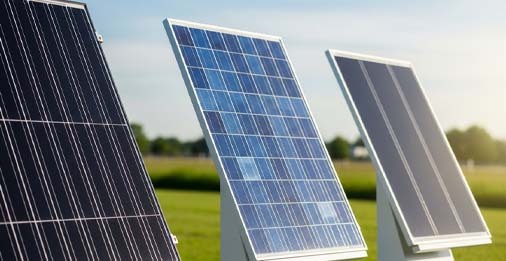
“Pakistan is among the best nations in the world for using solar energy because it receives more than 300 days of sunshine annually.” However, daily load shedding and excessive electricity bills continue to plague millions of households. By 2026, switching to solar energy will be mandatory. It is due to financial necessity. The best investment a Pakistani household or business can make is solar energy, since WAPDA’s tariffs for high-consumption consumers surpass PKR 60 per unit.
Understanding different types of solar panels that are currently on the market is crucial before installing your solar energy system.
What Are Solar Panels and Why Do They Matter in Pakistan?
Photovoltaic cells in solar panels are energy conversion devices that turn sunlight into electrical power. Over the past five years, Pakistan’s solar market has expanded at a rate never seen before due to rising electricity prices and the country’s expanding middle class, which is seeking energy independence.
By the end of 2026, more than 2 million families in Pakistan are expected to be using solar energy. Finding the best solar panel for your house or place of business is the first step in accomplishing this.
For a detailed review of popular options, check out our blog, Top 10 Solar Panels in Pakistan You Can Buy in 2025 – Efficiency, Warranty & Cost, to compare features and pricing.
The Main Types of Solar Panels
1. Monocrystalline Solar Panels
Monocrystalline solar panels are produced using a single pure crystal of silicon. They have the highest efficiency rate compared to other solar panels, ranging between 17% and 22% or even higher. In Pakistan, the best brands of monocrystalline solar panels, such as LONGi and Jinko, are available in the price range of PKR 30 to PKR 40 per watt in 2026.
Monocrystalline solar panels work extremely well in the scorching heat of the summer season in Lahore, Karachi, and Islamabad. They are ideal for use when the space is limited, but the power consumption is high.
2. Polycrystalline Solar Panels
Polycrystalline panels are manufactured by melting together several fragments of silicon. The easier method of production also makes it cheaper, with prices in Pakistan ranging between PKR 27 to PKR 31 per watt for A-grade variants.
The efficiency level of polycrystalline panels ranges between 15% and 17%, making them a decent mid-range choice for Pakistani consumers who have sufficient space on their roofs to accommodate solar panels and are looking to cut down on costs. Some of the best-selling polycrystalline panels available in the market are from JA Solar and Crown Solar.
3. Thin-Film Solar Panels
These panels are the most flexible and lightweight compared to other solar panels. They are best suited for large commercial rooftops and are also used in portable solar setups. These panels have the lowest efficiency, ranging from 10% to 13%, and are thus not the first choice for residential setups in Pakistan.
However, they can be used in industrial or agricultural setups in Punjab or Sindh, where land is not a constraint.
4. PERC and TOPCon Solar Panels
PERC (Passivated Emitter and Rear Cell) and TOPCon (Tunnel Oxide Passivated Contact) solar panels are the latest technology available in the market, which has been introduced in Pakistan as well.
These types of solar panels are an advanced version of monocrystalline solar panels with extra layers of technology that enhance their efficiency and performance in low-light conditions. As of 2026, Astronergy and Trina Solar are marketing N-type TOPCon solar panels in Pakistan, which cost between PKR 33 to PKR 37 per watt.
Learn more about selecting the right option in our blog, Which Type of Solar Panel is Best? A Comprehensive Guide to Choosing the Right Solar Solution.
Types of Solar Panels in Pakistan
Panel Type | Efficiency | Price (PKR/Watt) | Best For |
Monocrystalline | 17% to 22%+ | PKR 30 to 40 | Small rooftops, high-demand homes |
Polycrystalline | 15% to 17% | PKR 27 to 31 | Budget buyers, larger rooftops |
Thin-Film | 10% to 13% | PKR 22 to 27 | Commercial, agricultural use |
PERC/TOPCon | 18% to 23% | PKR 33 to 37 | Best overall for homes and offices |
Types of Solar Panels for Homes in Pakistan
Choosing among the different types of solar panels available for homes in Pakistan depends on your location, budget, and energy needs. In general, for most homes in Lahore, Karachi, and Islamabad that experience heavy summer demand and power outages, PERC or TOPCon monocrystalline solar panels are the most profitable option.
A typical 5kW solar panel system with these panels can help you save more than PKR 20,000 per month on your electricity bill. Homeowners in smaller cities and rural areas with more space on their rooftops may find polycrystalline solar panels a more economical choice.
The net metering policy of Pakistan also enables you to sell any surplus electricity generated by your solar panel system to the DISCOs, making a properly designed solar panel system not only a money-saving investment but also an income-generating asset.
How to Choose the Right Panel in Pakistan
Choosing the appropriate panel boils down to four considerations. First, assess your available roof area. If it is small, choose high-efficiency monocrystalline or PERC panels.
Second, determine your budget. A-Grade Tier-1 panels in Pakistan cost between PKR 27 to PKR 45 per watt in 2026, so understanding your per-watt budget will quickly help you make a decision.
Third, factor in your local climate. Pakistan’s scorching sun may impact panel performance, so ensure you check the temperature coefficient rating before making a purchase.
Fourth, demand A-grade documented panels with a manufacturer’s warranty of at least 10 to 25 years. B-grade panels may appear to be less expensive, but they will likely provide lower performance and no warranty support.
For a detailed review of top-performing options, see Which Solar Panel Is Best In Pakistan? to explore suitable panels for residential and commercial projects.
Conclusion
Pakistan is among the most solar-ready nations globally, and 2026 is the perfect year to make the transition. Whether you opt for the highest efficiency rate of monocrystalline solar panels, the cost-effectiveness of polycrystalline solar panels, or the latest technology of PERC and TOPCon solar panels, the right type of solar panels can render your home or business completely independent of increasing electricity bills and erratic load shedding for decades to come.
Visit Feroze Power to learn more about solar and take the first step towards becoming energy independent today.
Faqs
Q1: Which type of solar panel will be most popular in Pakistan in 2026?
In 2026, PERC/TOPCon, polycrystalline, and monocrystalline solar panels will be the most widely used types in Pakistan. Local market leaders include brands like Trina, Canadian Solar, JA Solar, Jinko, and LONGi.
Q2: In Pakistan's hot climate, which type of residential solar panels perform best?
The best solar panels for homes in Pakistan's hot climate are monocrystalline and PERC models because of their high temperature coefficients and ability to operate in low light on overcast monsoon days.
Q3: In Pakistan, which two types of solar panels do most buyers compare?
The two solar panel types that Pakistani consumers compare the most frequently are monocrystalline and polycrystalline. Polycrystalline wins on initial cost, while monocrystalline wins on efficiency.
Q4: In Pakistan, how long does it typically take for solar panels to pay for themselves?
In Pakistan, the majority of homeowners recoup their investment in 4–6 years, contingent on system size, energy usage, and the activation of net metering.