


Pakistan loses a large amount of agricultural productivity every year because of water shortages and rising fuel costs. Diesel-powered irrigation systems have become expensive for small and medium-scale farmers, especially in rural regions where the electricity supply remains unstable. A report from the International Energy Agency noted that solar adoption in South Asia has grown rapidly due to energy demand and farming needs. Solar water pumps are now becoming a practical solution for farms looking to reduce operational costs and improve water access throughout the year.
For decades, Pakistani farmers depended on electric tube wells and diesel engines to irrigate crops. That system worked when fuel prices were manageable, and electricity bills were lower. Things look different today. Farmers are searching for irrigation systems that can run reliably without daily fuel expenses. Solar water pumps offer long-term value, lower maintenance, and stable performance in areas where load shedding continues to affect agricultural work.
What Are Solar Water Pumps?
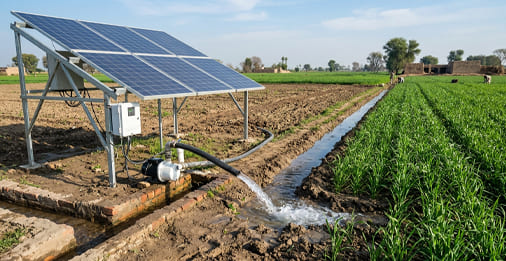
Solar water pumps use energy from sunlight to operate irrigation systems. Solar panels collect sunlight and convert it into electricity, which powers the pump motor. Water is then drawn from underground sources, canals, or storage tanks and delivered directly to farms.
These systems are now being used across Punjab, Sindh, and Balochistan, where farmers need reliable irrigation without depending heavily on diesel or unstable electricity supply.
Common types include:
- Surface pumps for canals and shallow water sources
- Submersible pumps for deep bore wells
- DC and AC solar pump systems
- Hybrid systems with battery support
Many farmers are now combining irrigation systems with battery energy storage systems (BESS) to store excess energy for later use during cloudy weather or evening hours.
Why Pakistani Farmers Are Switching to Solar
Agriculture contributes nearly 20% to Pakistan’s GDP, yet farmers continue to face power shortages and rising fuel prices. Running a diesel water pump for several hours daily can become financially difficult during peak farming seasons.
Solar technology changes that equation.
A farmer in South Punjab shared during a local agriculture exhibition that his monthly irrigation cost dropped by almost 70% after shifting to solar pumping systems. That type of saving matters for wheat, cotton, sugarcane, and rice growers working with tight margins.
Farmers are moving toward solar because:
- Diesel prices continue to increase
- Electricity load shedding affects irrigation schedules
- Solar systems require lower maintenance
- Water access becomes more consistent
- Long-term operating costs stay low
Some agricultural businesses are also pairing pumps with industrial solutions that help manage larger irrigation setups and energy usage across multiple farming zones.
How Solar Water Pumps Work
The system itself is fairly straightforward. Solar panels generate electricity during daylight hours, and that electricity powers the motor connected to the water pump.
A standard setup includes:
- Solar panels
- Pump controller
- Electric motor
- Water pump
- Storage tank or irrigation outlet
The size of the system depends on:
- Farm acreage
- Water depth
- Crop type
- Irrigation frequency
Drip irrigation and sprinkler systems often work efficiently with solar pumping because they use water carefully and reduce wastage.
Solar Water Pumps for Different Farming Needs
Small vegetable farms usually need lower capacity pumps, whilst commercial farms require stronger systems capable of moving large volumes of water daily.
This is why many farmers search for solar water pumps for farms, homes, and gardens that match specific land and water requirements instead of using a one-size-fits-all setup.
Where Solar Pumps Are Used in Pakistan
Solar irrigation systems are becoming more common in:
- Punjab wheat and rice farms
- Sindh cotton fields
- Balochistan orchards
- Remote livestock farms
- Greenhouse agriculture projects
Areas with limited electricity infrastructure benefit the most. Farmers in remote villages can operate irrigation systems independently without relying heavily on grid connections.
Some businesses are also integrating smart intelligent lighting systems alongside solar irrigation to improve nighttime farm operations and security.
Benefits of Using Solar Irrigation Systems
Lower Operating Costs
Once installed, solar systems operate using sunlight instead of expensive fuel. This reduces monthly expenses significantly over time.
Reliable Water Supply
Crops require timely irrigation. Delays caused by fuel shortages or power cuts can damage production. Solar pumps provide more stable daily operation.
Reduced Maintenance
Diesel engines need frequent servicing and fuel management. Solar systems generally require less maintenance and fewer moving parts.
Environment-Friendly Farming
Agriculture already faces pressure from climate-related challenges. Solar systems reduce carbon emissions and support cleaner farming practices.
Better Long-Term Investment
Many farmers recover installation costs within a few years because of reduced electricity and diesel expenses.
Some agricultural experts also compare the shift toward solar farming with the growing global interest in renewable energy systems like wind power and turbines used in larger power generation projects.
How Feroze Power Supports Agricultural Growth
Feroze Power provides renewable energy systems designed for residential, agricultural, and commercial use in Pakistan. The company has worked with businesses and farms looking to improve energy efficiency through solar technology.
Farmers often need guidance about:
- Correct pump sizing
- Solar panel capacity
- Water depth analysis
- Battery backup options
- Installation planning
This is where experienced providers become important. A poorly sized pump system can reduce efficiency and increase future costs.
Many customers also explore other renewable options after installing solar irrigation systems, including learning about the advantages of wind energy for larger agricultural operations.
Government Support and Net Metering Trends
Pakistan has seen increasing interest in renewable energy policies during recent years. Some farmers and commercial landowners now combine irrigation systems with rooftop solar installations connected through net metering arrangements.
This allows excess electricity generation to be sent back into the grid, helping reduce electricity bills further.
Government programs and financing initiatives have also encouraged solar adoption in agriculture through:
- Subsidized loan programs
- Renewable energy awareness campaigns
- Agricultural modernization projects
International development organizations have also supported solar irrigation projects in water-stressed farming regions.
Cost Considerations and Long-Term Savings
The cost of a solar pumping system depends on:
Factor | Impact on Cost |
Water depth | Deeper wells require stronger pumps |
Farm size | Larger farms need more solar panels |
Battery backup | Storage systems increase the total price |
Pump capacity | Higher horsepower costs more |
Installation location | Remote sites may increase setup costs |
Many farmers initially hesitate because of installation costs. Yet long-term savings often outweigh the upfront investment.
A diesel irrigation setup can consume large amounts of fuel annually. Solar systems remove most of that recurring expense.
Farmers also report improved productivity because irrigation schedules become more reliable during critical crop growth periods.
Conclusion
Pakistan’s agriculture sector continues to face pressure from rising fuel prices, electricity shortages, and water management challenges. Solar water pumps are helping farmers improve irrigation reliability whilst reducing long-term operating costs. From small vegetable farms to large commercial agricultural projects, solar irrigation systems are becoming a practical investment for sustainable farming.
Businesses like Feroze Power are helping farmers move toward cleaner and more efficient energy systems through modern solar technology solutions. Farmers planning future irrigation upgrades should explore renewable energy options now and visit the company website to learn more about available solar solutions for agricultural needs.
Faqs
What are Solar water pumps used for in Pakistan?
Solar water pumps are mainly used for agricultural irrigation, livestock farms, gardens, and water supply systems in areas with limited electricity access.
How much sunlight do Solar water pumps need to operate properly?
Most Solar water pumps work efficiently with direct sunlight during daytime hours. Performance depends on solar panel size and weather conditions.
Are Solar water pumps better than diesel pumps?
Many farmers prefer solar systems because they reduce fuel costs, require less maintenance, and provide long-term savings.
Can solar pumps support drip irrigation systems?
Yes. Solar-powered systems work well with drip irrigation and sprinkler systems used for water-efficient farming.
How long do solar pumping systems last?
Most solar panels last over 20 years with proper maintenance, whilst pumps can also operate efficiently for many years depending on usage.