


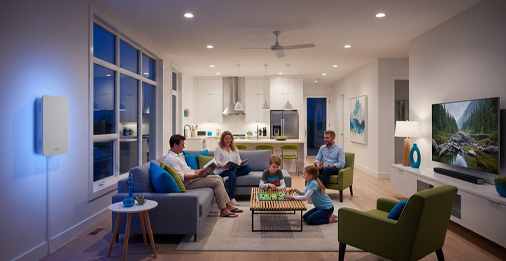
Pakistan’s electricity bills crossed record highs in 2026, with residential consumers paying between Rs 22 and Rs 65 per unit depending on their consumption slab. Load shedding continues across most cities, and NEPRA’s shift from net metering to net billing has fundamentally changed the financial case for solar without storage. A home battery energy storage system is no longer an upgrade for early adopters. It is the missing piece that makes a solar investment work the way homeowners expected it to when they first installed panels.
The benefits of a home battery energy storage system in 2026 are measurable, proven, and growing more compelling with every tariff revision. Pakistan imported 1.25 gigawatt-hours of lithium-ion battery packs in 2024, with adoption accelerating sharply in 2025 as homeowners realised that solar alone could not deliver the energy independence they were promised. This guide covers exactly what a residential battery system does for a household and why 2026 is the right time to act.
What Is a Battery Energy Storage System
Before understanding the benefits, it helps to be clear on what a battery energy storage system is at its core. A BESS is a technology that captures electrical energy and stores it chemically inside battery cells for release at a later time. At the residential level, it acts as an intelligent buffer between how energy is generated and how it is consumed.
The system does not simply store electricity passively. A modern residential battery energy storage system (BESS) constantly monitors solar generation, household consumption, grid conditions, and battery charge levels simultaneously. It makes automated decisions about when to store, when to release, and when to draw from the grid based on real-time data.
Core Components of a Home BESS
Every residential system includes four main elements working together:
- The battery cells that hold stored energy, most commonly lithium iron phosphate in 2026
- A battery management system that regulates temperature, charge rate, and cell balance
- A hybrid inverter that converts between direct and alternating current and manages energy routing
- An energy management software layer that learns household patterns and optimises automatically over time
Understanding these components matters because the quality of each directly determines how efficiently the system performs and how long it lasts.
How a BESS Increases the Real Value of Solar
Solar panels alone only deliver their full potential when the sun is shining and appliances are running simultaneously. Without storage, a household typically self-consumes only 30 to 40 percent of the solar energy it generates. The remainder is either wasted or exported to the grid at Pakistan’s current reduced buyback rates under the new Prosumer Regulations framework.
Adding a battery energy storage system (BESS) changes this fundamentally. Stored daytime generation becomes available for evening use, overnight loads, early morning demand before solar production begins, and cloudy periods when panels underperform. Self-consumption rates with a properly sized battery typically rise to between 70 and 85 percent, more than doubling the proportion of a household’s electricity that comes from its own clean generation.
This shift in self-consumption is where the true financial return on a solar-plus-storage investment lives, not in export credits but in avoided grid purchases at full consumer tariff rates.
Why Storing Energy at Home Is Smarter Than Selling It Back
Understanding net metering in Pakistan’s current form is essential for any homeowner evaluating the case for battery storage. Pakistan crossed 6.1 gigawatts of cumulative net-metered solar capacity by mid-2025, but the regulatory environment shifted significantly when NEPRA transitioned new applicants from one-to-one net metering to a net billing model under the Prosumer Regulations 2025.
Under the current framework, surplus solar electricity exported to the grid earns approximately Rs 10 to Rs 13 per unit. The same household then purchases grid electricity at Rs 22 to Rs 44 per unit, depending on its consumption slab. This asymmetry means every unit exported represents a financial loss compared to every unit consumed directly from storage.
The arithmetic is straightforward. A unit stored in a battery and used at home saves the full grid purchase rate. The same unit exported earns less than a third of that value. For any household generating meaningful solar surplus, a BESS is the mechanism that captures what would otherwise be a financial loss and converts it into maximum savings.
How a BESS Protects Against Unpredictable Electricity Costs
One of the least discussed but most valuable benefits of a home battery energy storage system is the protection it provides against future tariff increases. Pakistan’s electricity tariffs have demonstrated a consistent upward trajectory, and each increase in the per-unit rate automatically increases the value of every unit of electricity a household avoids purchasing from the grid.
A household that installs a BESS today locks in a portion of its electricity supply at the cost of solar generation, which, once the system is paid off, is effectively free. As grid tariffs continue rising over the 10 to 15-year lifespan of a modern lithium iron phosphate battery, the savings generated by the system grow proportionally without any additional cost to the homeowner.
This long-term cost insulation effect is comparable to fixing a portion of your household’s energy cost index for over a decade, an advantage that becomes more valuable with every tariff revision cycle.
The Property Value Advantage Nobody Talks About
Research from the United States Department of Energy shows that homes with solar and battery storage installations command property value premiums of 3 to 5 percent compared to equivalent properties without them. While Pakistan’s property market does not yet formally price energy infrastructure the way some international markets do, the trend among urban homebuyers is shifting rapidly.
As electricity costs have become a major monthly expense and load shedding has persisted, energy-independent homes attract genuine buyer interest. A property equipped with a functioning solar-plus-storage system represents a measurable monthly saving that a prospective buyer inherits the day they move in. That value is increasingly reflected in asking prices and sale outcomes.
For homeowners who eventually sell, a well-installed and documented BESS system is no longer simply a household utility. It is an asset that contributes to the marketable value of the property.
Carbon Credits and the Environmental Return
Every kilowatt-hour stored in a residential battery and used instead of grid electricity displaces power that would otherwise have been generated from fossil fuels. A 5 kW solar-plus-storage system in Pakistan avoids approximately 6.5 tons of carbon dioxide emissions annually and more than 160 tons across a 25-year system lifespan.
Pakistan has begun developing policy frameworks for participation in voluntary and compliance carbon credit markets following COP-29 commitments and the government’s recent carbon market policy guidelines. A carbon credit represents one metric ton of carbon dioxide avoided or reduced and can be traded in international markets once formal verification systems are in place.
Households and businesses installing solar-plus-storage systems today are building the emissions reduction track record that will eventually qualify for carbon credit monetisation as Pakistan’s participation in international carbon markets matures. The environmental benefit, already meaningful on its own terms, is increasingly becoming a potential financial asset as well.
What Residential Solutions Look Like in Practice
The most common question homeowners ask when exploring battery storage is how a real system maps to their specific household. The answer depends on daily consumption, the size of the existing solar installation, and the priority loads the homeowner wants to protect. Residential solutions are not one-size-fits-all and should always be sized through a proper assessment.
The table below illustrates how different household profiles map to typical BESS configurations in Pakistan:
Household Profile | Daily Consumption | Recommended BESS | What It Covers |
Small flat or apartment | 10 to 15 units | 3 to 5 kWh | Lights, fans, fridge, phone charging |
Medium family home | 20 to 30 units | 7 to 10 kWh | Above plus TV, water pump, small AC |
Large home with AC | 35 to 50 units | 12 to 20 kWh | Full essential load coverage overnight |
Villa or commercial residence | 50 units and above | 20 kWh and above | Whole-home or office coverage |
High-quality lithium iron phosphate batteries available in 2026 carry cycle life ratings of 6,000 to 10,000 charge-discharge cycles, translating to 15 to 20 years of reliable performance. Even with Pakistan’s import duties adding approximately 48 percent to battery costs, residential systems achieve payback periods of 3 to 5 years under current tariff conditions.
How the Best Battery Energy Storage System for Solar Panels Is Chosen
Selecting the best battery energy storage system for solar panels requires evaluating more than the upfront price per kilowatt-hour. The chemistry, compatibility, warranty terms, and quality of after-sales support all determine the actual value delivered over the system’s lifespan.
Chemistry and Safety
Lithium iron phosphate, commonly known as LFP, is the recommended chemistry for Pakistani residential conditions in 2026. It performs well in high ambient temperatures, has a significantly lower risk of thermal events than older lithium-ion chemistries, and maintains performance over a far greater number of charge cycles. This makes it the most cost-effective option across a full ownership period, even when its upfront cost is higher than alternatives.
Inverter Compatibility
A battery is only as intelligent as its inverter allows it to be. A hybrid inverter that communicates directly with the battery management system enables real-time energy routing, automatic grid switching, and performance monitoring through a smartphone app. Mismatched components create inefficiencies that silently reduce savings and shorten system life.
Warranty and Local Support
A battery with a strong manufacturer’s warranty backed by a local provider who can actually honour it matters enormously in Pakistan’s market. Selecting a system through a trusted installer with a demonstrated service track record protects the investment across the system’s full operational life.
Feroze Power provides complete consultation, accurate load assessment, right-sized system design, professional installation, and ongoing support for homeowners across Pakistan looking to make this investment with confidence.
Conclusion
The benefits of a home battery energy storage system extend well beyond backup power. They represent a shift in how a household relates to its energy supply, moving from passive grid dependence to active, intelligent self-sufficiency. In Pakistan’s current environment of rising tariffs, changing net billing policies, and increasing solar adoption, a BESS is the component that completes the energy independence equation.
Feroze Power brings the technical expertise, product knowledge, and local market understanding to help Pakistani homeowners make this investment correctly. From helping you understand the best battery energy storage system for solar panels to designing the right residential solutions for your specific home, the team is committed to delivering lasting value at every step.
Faqs
What are the most important benefits of a home battery energy storage system for Pakistani households?
The key benefits of a home battery energy storage system include maximised solar self-consumption, protection from load shedding, long-term bill savings, and insulation against rising tariffs. Under Pakistan's current net billing framework, a BESS also preserves the full value of solar generation by replacing low-rate grid exports with high-value self-consumption.
What is a battery energy storage system, and how does it differ from a regular UPS?
What is a battery energy storage system versus a UPS comes down to intelligence and integration. A UPS offers basic short-term backup using lead-acid technology. A residential BESS is a solar-integrated energy management system with smart monitoring, hybrid inverter compatibility, thousands of charge cycles, and a lifespan measured in decades.
How does the net metering policy make a BESS more valuable in 2026?
Under Pakistan's updated net metering framework, exported solar units earn only Rs 10 to Rs 13 per unit, while grid electricity costs Rs 22 to Rs 44 per unit to import. A battery energy storage system (BESS) stores that surplus for self-consumption at full replacement value, making storage far more rewarding than grid export.
Can installing a home BESS help earn carbon credits?
Yes. Every unit stored in a battery energy storage system (BESS) and consumed in place of grid electricity avoids fossil fuel-generated power, contributing toward carbon credit eligibility as Pakistan develops its carbon market participation framework.
What residential solutions does Feroze Power offer?
Feroze Power designs complete residential solutions covering system sizing, battery and inverter selection, professional installation, and ongoing support to ensure long-term performance across your system's full lifespan.