


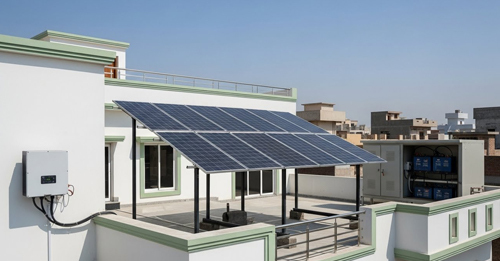
Solar power kits have rapidly become one of the most viable energy solutions for homes and businesses throughout Pakistan in response to rising electricity costs and power outages. By offering comprehensive pre-configured solar setups with easy installation procedures that consistently perform under local climate conditions, these kits provide an efficient pathway towards energy independence without technical complexity. If you’re new to the concept, Solar Energy Explained: How It Works and Why It’s the Future of Power offers a clear breakdown of how sunlight is converted into usable electricity and why solar adoption continues to grow globally.
Contrary to custom-built systems, solar power kits are designed with component compatibility in mind in order to reduce mismatched hardware and performance loss.
What Are Solar Power Kits and What Do They Include?
Solar power kits are comprehensive systems of solar panels, inverters, battery storage solutions, and mounting structures designed to work seamlessly together for efficient energy production and storage. Every component works cohesively to guarantee reliable power production and storage.
Solar panels convert sunlight to electricity using monocrystalline technology for its superior efficiency and heat tolerance, and an inverter then converts this DC electricity to AC power suitable for household or commercial usage. Batteries store any excess energy during power outages or nighttime use, while mounting structures ensure maximum sunlight exposure to each panel.
Pre-packaged systems enhance system reliability while decreasing installation errors.
How to Choose the Right Solar Power Kits by Capacity
Selecting the ideal system size is crucial to performance, cost reduction, and long-term satisfaction. Solar kits typically fall into categories according to energy demand and usage objectives.
Small systems between 1KW and 3kW provide essential backup, providing enough power for lights, fans, internet routers, and small appliances during load shedding, making them suitable for apartments or offices alike.
Medium-sized solar power kits ranging from 5kW to 10kW are the most common choice for residential homes. These systems can power multiple air conditioners, refrigerators, and lighting circuits simultaneously. Many homeowners planning systems in this range often compare panel quality first, which is why Best Solar Panels in Pakistan: Experts’ Top Picks is a useful resource when evaluating performance and long-term value.
Large solar power kits of 15kW or greater are specifically tailored to commercial and industrial uses, prioritizing high generation capacity, system scalability, and advanced monitoring to significantly decrease reliance on grid electricity.
Solar Panel Efficiency and Durability in Solar Power Kits
Panel efficiency directly impacts how much electricity can be produced from limited roof space. High-efficiency panels are especially essential in urban environments where installation space is at a premium. Pakistan’s climate requires low temperature coefficient panels in order to keep output consistent during extreme heat periods.
Durability is equally essential. Solar panels used in kits must be certified to withstand dust accumulation, strong winds, and prolonged sun exposure without rapidly diminishing performance. Positive power tolerance ratings ensure panels maintain consistent output over time.
Why the Inverter Is Critical in Solar Power Kits
All solar power kits are controlled by the inverter. Because they control power flow between solar panels, batteries, and the utility grid, hybrid inverters are frequently used. A high-quality inverter facilitates intelligent load control, increases conversion efficiency, and shields appliances from voltage swings.
Transparency and system control are enhanced by built-in monitoring facilities that let users track energy output and consumption in real time.
Understanding how solar systems integrate with household power flow is easier after reviewing What Is Solar Power? How It Works, which outlines the role of inverters and energy conversion in detail.
Battery Storage and Power Reliability
The effectiveness of solar power kits during blackouts depends on battery storage, and lithium-ion batteries are the best option because of their longer cycle life, deeper depth of discharge, and low maintenance needs. With the right thermal management techniques in place, they not only work consistently but are also more suited to Pakistan’s high temperatures.
Compared to capacity ratings alone, cycle life and discharge capability are more reliable measures of battery quality.
Maintaining Solar Power Kits for Long-Term Efficiency
Maintaining solar power kits regularly is crucial to their efficiency. Dust buildup on panels can drastically decrease energy output in semi-arid regions; regular brushing helps preserve power output and extend system lifespan.
Routine inspections of wiring, mounting structures, and inverter settings help maintain consistent performance while decreasing long-term repair costs.
Professional Installation and Compliance
Professional installation is essential to the optimal operation of any solar power kit, with certified installers ensuring proper panel orientation, secure electrical connections, compliance with local net-metering regulations, and warranty protection. In addition, proper commissioning also protects manufacturer warranties and increases system reliability.
Feroze Power offers experienced services that emphasize installation quality, system optimization, and after-sales support to help users maximize their return on investment.
Final Thoughts on Solar Power Kits
Solar power kits provide a practical and scalable solution to Pakistan’s energy challenges. By choosing the appropriate capacity and component quality and working with qualified installers, homeowners and businesses can achieve reliable electricity with lower energy costs and long-term sustainability. When planned and maintained properly, solar power kits may even become the primary energy source instead of just an emergency backup source.
Faqs
Q1: What is the correct size of solar power kits available?
The first step is to estimate your daily electricity consumption in units and pair it with a kit that is big enough to accommodate peak hours. Under or oversizing can be avoided with the help of tools such as an energy consumption calculator.
Q2: Do solar power kits work well in regions where the load shedding is frequent?
Yes. The majority of the current solar power systems have hybrid inverters and a battery storage option that enables homes and businesses to operate certain appliances even when the power grid is not available.
Q3: What is the average life of solar power kits in the Pakistani climate?
Solar power kits of quality may last 20-25 years of panel life, and inverters and batteries may require replacement sooner, depending on the use and maintenance. Frequent cleaning and expert fitting contribute greatly to the life of the system.