


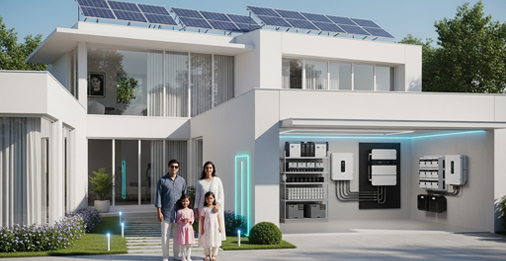
Pakistani homeowners know the frustration all too well. Load shedding that stretches into the evening. Bills that climb every quarter. Solar panels that do nothing after sunset without a place to store what they generated all day. Battery energy storage systems are the missing piece that makes solar genuinely useful around the clock. Battery storage adoption is accelerating in Pakistan’s residential, commercial, and industrial sectors, driven by high electricity costs and declining solar component prices. Consumers are combining solar with battery energy storage systems to reduce grid dependence, lower energy bills, and improve reliability.
What are Battery Energy Storage Systems?
A battery energy storage system is one of the main types of energy storage systems in which batteries, either individually or in a group, are used to store electricity produced by generation plants and make it available when needed.
In a battery energy storage system, the main components are the battery blocks and other elements such as an inverter, which converts the direct current from the batteries into the alternating current of the electricity grid (and vice versa), a transformer, which adapts the system’s voltage to that of the grid; and finally, auxiliary systems (in particular cooling and fire protection). Battery energy storage systems optimize energy use, reduce electricity costs, and improve grid reliability.
Why Pakistani Homes Need Battery Energy Storage Systems
Pakistan’s energy environment places unique demands on any storage solution. Summer temperatures regularly exceed 45 degrees Celsius in cities like Karachi, Multan, and Lahore. Voltage fluctuations are common. Load shedding remains a daily reality for millions of households, and electricity tariffs have risen sharply year on year.
Pakistan’s weather conditions create unique stress on solar batteries due to high summer temperatures, dust, and humidity in many regions and frequent power outages and voltage fluctuations. These factors directly affect battery performance and lifespan. A battery that works well in cooler climates may not perform the same way here.
Without proper battery energy storage systems (BESS), even a well-designed rooftop solar system cannot deliver on its promise. Panels generate power during daylight hours, but the bulk of household consumption happens in the evening when generation stops. Solar panels generate electricity during the day, but without a battery system, excess energy is wasted or sent back to the grid. A solar battery stores that energy, allowing you to use it at night or during power outages.
The case for battery energy storage systems in Pakistani homes and residential solar solutions has never been stronger.
How Battery Energy Storage Systems Work
Battery energy storage systems use electrochemical batteries to store energy produced by renewable energy plants. They are known as electrochemical energy systems. This is to distinguish them from others, such as gravitational energy systems like pumped hydroelectric power plants; mechanical energy systems, including compressed air or flywheel systems; and thermal energy systems (Thermal Energy Storage, TES).
As in all storage systems, in BESS, the electricity produced by a power plant or any other generation method is stored and then released when needed.
Battery energy storage systems operate through four key components working together:
Solar Panels: Generate DC electricity from sunlight throughout the day.
Hybrid Inverter: Converts DC electricity into the AC current your home appliances use, and manages the flow of energy between panels, battery, and grid.
Battery Pack: Stores surplus electricity that would otherwise go unused or be exported to the grid at a low rate.
Battery Management System (BMS): Monitors cell temperature, voltage, and charge levels to protect the battery from damage and extend its lifespan.
Types of Battery Energy Storage Systems
Not all battery energy storage systems work the same way. The right configuration depends on your home size, daily load, and whether you are on or off the grid.
AC-Coupled Systems
In an AC-coupled setup, the battery connects to the home’s AC circuits rather than directly to the solar panels. This makes them easier to add to existing solar installations and compatible with most inverter brands already in the market.
DC-Coupled Systems
DC-coupled systems connect the battery directly to the solar panels on the DC side, before the inverter. This setup is more efficient because energy is converted fewer times before being stored, which reduces losses. They are best suited for new installations where everything is designed together from the start.
Hybrid Systems
Advanced hybrid inverters allow easy battery integration whenever you decide to upgrade. Hybrid systems are the most common choice for Pakistani homeowners in 2026 because they handle solar, battery, and grid power simultaneously with a single device, simplifying the overall system.
Off-Grid Systems
For homes in areas where grid connection is unreliable or unavailable, off-grid battery systems operate completely independently. They require larger battery capacity and careful load management but deliver complete energy independence.
Exploring residential battery storage systems in detail helps homeowners understand which configuration matches their situation before committing to an installation.
Best Battery Technologies for Pakistani Homes
Pakistan’s solar battery market is clearly shifting toward Lithium-Ion LiFePO4 technology. Many industry discussions highlight lithium batteries as the future of solar energy storage due to their durability and efficiency.
Here is how the main battery technologies compare in Pakistan’s specific conditions:
1. Lithium Iron Phosphate (LiFePO4)
The gold standard for home energy storage in 2026. LiFePO4 batteries offer exceptional thermal stability, which is critical in Pakistan’s extreme summer heat. LiFePO4 batteries offer higher safety, longer cycle life of 6,000 to 8,000 cycles, better heat resistance, and a lower total cost of ownership compared to standard lithium-ion NMC batteries. They require zero maintenance and deliver consistent performance across their entire lifespan.
2. Lithium NMC (Nickel Manganese Cobalt)
Higher energy density than LiFePO4, meaning more storage in a smaller physical footprint. Used in premium international products like the Tesla Powerwall. Slightly less thermally stable than LiFePO4, which makes them more suitable for temperature-controlled environments.
3. Tubular Lead Acid
Tubular batteries are the most commonly used solar batteries in Pakistan. Brands like Phoenix and Osaka are very popular because they offer good performance at a reasonable price. They require periodic maintenance, have a shorter lifespan of 2 to 3 years, and perform less efficiently in deep discharge situations. Best suited for budget-conscious installations with modest energy needs.
4. Flow batteries
Flow batteries are an emerging technology that promise to play a key role in the future, as they are a more environmentally sustainable alternative to the current lead-acid and lithium-ion technologies. Unlike traditional batteries, their unique design decouples energy storage from power delivery, enabling cost-effective scaling for multi-hour backup and grid stabilization.
5. Solid-state batteries
While conventional and flow batteries normally use liquid electrolytes, in this case, they are in a solid state (e.g., ceramic or synthetic materials). They perform well, but are still expensive.
For homeowners, LiFePO4 lithium technology is the clear recommendation, providing long-term performance.
Top Battery Brands Available in Pakistan
1. Pylontech
One of the most widely distributed lithium battery brands in Pakistan. Pylontech’s modular design allows homeowners to start with a smaller capacity and expand over time as their needs or budget allow. Strong compatibility with most hybrid inverters available locally.
2. BYD Battery-Box
A premium option from one of the world’s largest battery manufacturers. BYD systems offer high cycle life, robust BMS protection, and excellent warranty terms. For premium whole-home backup, Tesla Powerwall and BYD Battery-Box lead the market.
3. Tesla Powerwall
Tesla Powerwall is one of the most recognized home battery brands globally. It has features such as remote monitoring, large capacity, and long backup time, although import costs and duties make it the most expensive option in Pakistan. While it’s not locally made, it is available through import and is growing in popularity in urban areas of Pakistan.
4. Huawei LUNA
Huawei’s home battery solution integrates tightly with its solar inverter ecosystem. Smart energy management features and strong warranty support make it a popular choice for homeowners already using Huawei inverters.
5. Inverex
Inverex is a well-known brand in Pakistan’s solar market. Their LiFePO4 lithium iron phosphate batteries are lightweight and fast charging. They perform well at home and in small office environments where fast restart and long battery life are of concern.
6. Local and OEM Options
Several locally branded and OEM lithium systems have entered the Pakistani market, offering competitive pricing with varying levels of warranty and after-sales support. Quality varies significantly between suppliers, making it important to verify certifications and local service availability before purchasing.
Battery Storage Comparison Table
Choosing the right battery helps you select the most reliable and cost-effective energy solution for your specific power needs.
Battery Type | Lifespan | Maintenance | Heat Tolerance | Upfront Cost | Best For |
LiFePO4 Lithium | 10 to 15 years | None | Excellent | High | Long-term home use |
NMC Lithium | 8 to 12 years | None | Good | High | Premium installations |
Tubular Lead Acid | 2 to 3 years | Monthly | Moderate | Low | Budget setups |
Flow batteries | Not widely used yet | None | Good | High | Grid stabilization / future storage |
How to Choose the Right System for Your Home
Choosing the right battery energy storage system comes down to five practical factors:
1. Calculate Your Daily Load
Add up the wattage of all appliances you need to run during load shedding or at night. This gives you the minimum storage capacity you need. Undersizing the battery is the most common mistake Pakistani homeowners make.
2. Match Battery to Inverter
Make sure your battery matches your solar inverter capacity. The wrong battery size can damage the inverter or reduce backup time. Always confirm compatibility with your installer before purchasing.
3. Consider Depth of Discharge
Depth of discharge refers to how much of the battery’s capacity can be used before recharging. LiFePO4 batteries typically allow 80 to 95 percent depth of discharge, compared to 50 percent for most lead acid options. A higher depth of discharge means more usable energy from the same rated capacity.
4. Check Warranty Terms
A quality home battery should carry a minimum 5-year warranty. Premium brands like BYD and Pylontech offer 10-year warranties on their residential products. Choosing a battery just because it is cheap can lead to poor performance, shorter lifespan, and frequent replacements.
5. Plan for Professional Installation
Incorrect installation can reduce battery efficiency and increase safety risks. Batteries should always be installed in a well-ventilated area with proper wiring and professional guidance to ensure optimal performance. Working with a qualified EPC vendor ensures your system is correctly designed, safely installed, and performing at its rated capacity from day one.
The Financial Case for Home Battery Storage
The numbers increasingly support battery investment for Pakistani homeowners. Solar with battery energy storage systems has a payback period of 3 to 5 years in Pakistan’s residential sector, despite a 48 percent cost increase from surcharges and duties on lithium-ion batteries.
Beyond the payback period, lithium battery systems continue generating savings for a decade or more with minimal ongoing costs. Proper operations and maintenance of your system ensure it continues performing at rated capacity throughout its lifespan, protecting your investment and maximizing returns.
For homeowners interested in going further, battery storage installations that contribute to clean energy generation can also create eligibility for carbon credit programs, adding another financial dimension to the investment beyond simple bill reduction.
Pakistan imported an estimated 1.25 gigawatt-hours of battery energy storage in 2024. This could increase to 8.75 gigawatt-hours, or 26 percent of the projected peak demand in 2030, if current trends continue. The market is moving fast. Homeowners who invest now lock in current pricing and begin generating returns immediately.
Conclusion
Battery energy storage systems are the key element in the energy transition, with a range of applications and significant benefits for the economy, society, and our environment. Load shedding, rising tariffs, and an increasingly unreliable grid have made battery energy storage systems a necessity rather than a luxury for Pakistani homeowners. The technology has matured, the prices have come down, and the case for investing in home battery storage has never been clearer.
Feroze Power helps homeowners across Pakistan design, install, and maintain battery energy storage systems built for local conditions and optimal performance. Whether you are installing a new solar system or adding storage to an existing setup, the right system is available, and the right support is here.
Faqs
Q1. What are battery energy storage systems?
Battery energy storage systems store electricity generated by solar panels for use at night, during load shedding, or when the grid supply is unavailable. They give Pakistani homes reliable, uninterrupted power independent of WAPDA.
Q2. Which battery is best for home use in Pakistan?
LiFePO4 lithium batteries are the best choice for Pakistani homes in 2026. They offer the longest lifespan, better heat tolerance, and the least maintenance.
Q3. How long do battery energy storage systems last?
LiFePO4 lithium battery energy storage systems can last 10 to 15 years with 6,000 to 8,000 charge cycles. Tubular lead-acid batteries last 2 to 3 years under regular use.
Q4. How much does a home battery storage system cost in Pakistan?
Costs vary widely by capacity and brand. Entry-level lithium systems start from around PKR 220,000 for a 5 kWh module. Premium whole-home systems from brands like Tesla or BYD can exceed PKR 1,200,000, including installation.
Q5. Do I need a professional to install a battery storage system?
Professional installation is very important for safety, system performance, and warranty claims. Experienced installers, such as Feroze Power, make sure correct sizing, safe wiring, and proper connection with your existing solar setup.