


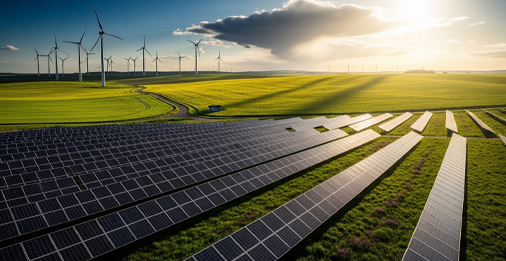
“The Earth provides enough to satisfy every man’s needs, but not every man’s greed.” – Mahatma Gandhi
Energy is the backbone of the contemporary world. However, with the depletion of fossil fuels and the rising effects of global warming, the only question on everyone’s lips is, “What is renewable energy? And why is it important?” The concept is not new. Wind and water energy were harnessed by ancient cultures centuries ago.
However, renewable energy currently accounts for 32% of the world’s electricity production and is predicted to overtake coal as the dominant form of electricity production by the end of 2025. It provides millions of jobs, reduces carbon emissions, and provides long-term cost stability. This guide will provide you with all the information you need about renewable energy.
What Is Renewable Energy?
What is renewable energy? Renewable energy is energy that comes from natural resources that can be replenished. The resources (sunlight, wind, water, geothermal energy, and biomass) are not finite.
This means that they emit little to no greenhouse gases. Renewable energy has been around for thousands of years. Examples include Persian windmills in 500 BC and the first hydroelectric power station in Wisconsin in 1882. Currently, renewables represent 46% of the world’s installed power capacity.
Types of Renewable Energy
There are five main types of renewable energy, each with unique applications:
1. Solar Energy
Solar energy involves the use of solar panels to convert sunlight into electricity. In 2024, solar energy production exceeded 2,131 TWh worldwide, registering a 30% increase from the previous year and marking the third consecutive year that solar energy has been the biggest contributor to new electricity capacity additions (Ember, 2025). The world set a new record in 2024 by installing a record 597 GW of solar energy, which marked the crossing of the 2 terawatt total milestone.
Discover the power of solar energy in our article, Solar Energy Explained: How It Works and Why It’s the Future of Power, highlighting its benefits, technology, and role in a sustainable future.
2. Wind Energy
Wind energy involves the use of wind turbines to generate electricity from wind. Denmark currently generates 59.3% of its electricity from wind energy in 2024, up from 56% in 2020, and aims to achieve 100% renewable electricity by 2030. Wind energy production increased by 8% in 2024, adding 182 TWh to global production.
Explore wind power in Pakistan with our guides, “What is Wind Energy” and “Different Types of Wind Energy in Pakistan.” Learn how wind energy works, its benefits, and the various types driving sustainable power across the country. Discover why investing in wind solutions is shaping Pakistan’s energy future.
3. Hydropower
Hydropower involves the use of water to generate electricity by spinning turbines. Hydropower has remained the largest single source of renewable electricity in the world, contributing 14% of global electricity in 2024. Hydroelectricity production staged a strong recovery in 2024, increasing by 190 TWh after drought-related losses in 2023.
4. Geothermal Energy
Geothermal energy harnesses heat from beneath the Earth’s surface. Iceland derives almost 100% of its electricity from geothermal and hydropower sources combined, ensuring a clean 24/7 supply of electricity with negligible emissions.
5. Biomass
Biomass energy is derived from organic substances like wood, agricultural waste, and animal products. Biomass energy is renewable because new plant growth absorbs carbon dioxide from the atmosphere. Biomass energy accounts for 10% of the world’s energy requirements and 3% of global electricity production.
Renewable Energy vs Non-Renewable Energy
Understanding what is renewable energy and non-renewable energy helps clarify the choice facing the world today:
Factor | Renewable Energy | Non-Renewable Energy |
Source | Sun, wind, water, geothermal, biomass | Coal, oil, natural gas, uranium |
Replenishment | Naturally replenished | Takes millions of years to form |
Emissions | Minimal to zero | High CO₂ emissions |
Global Share (2024) | 32% of electricity (IEA) | ~60% of electricity |
Jobs (2024) | 16.6 million (IRENA/ILO) | Shrinking workforce |
Capacity (end 2024) | 46% of global power capacity | Declining share globally |
Cost Trend | Rapidly falling | Volatile and rising |
Long-Term Supply | Effectively infinite | 50 to 150 years remaining |
Is Solar Energy a Renewable or Nonrenewable Resource?
Is solar energy a renewable or non-renewable resource? Solar energy is 100% renewable. The sun will continue to produce energy for about 5 billion years. There are no emissions produced by solar panels when they are in use.
The cost of solar energy reached a record low of $36/MWh in 2024. Solar energy is the world’s most cost-competitive new electricity technology. It is about half the cost of unabated coal and gas. Solar energy has doubled every three years since 2016 and accounts for 7% of the world’s electricity demand.
Why Renewable Energy Matters
- Climate: Renewables are set to overtake coal as the leading electricity source globally by the end of 2025, reducing CO₂ emissions at a pivotal point in the fight against climate change.
- Jobs: The industry reached a record 16.6 million jobs worldwide in 2024 and is set to hit 38 million jobs by 2030.
- Record Growth: The industry experienced its biggest-ever capacity addition in 2024, adding 585 GW of new capacity, which increased the global installed base by 15.1%. Renewables accounted for 92.5% of new power capacity additions globally.
- Health: The shift away from fossil fuels cuts air pollution, which causes 7 million premature deaths annually (WHO). The renewable industry also accounted for 75% of the increase in electricity demand in 2024.
Conclusion
What is renewable energy? It is the basis of a cleaner, more affordable, and more secure energy future. From solar roofs to wind farms that power cities, renewables are no longer a vision of the future. They are the reality of today. With renewables reaching 32% of the world’s electricity in 2024, a record-breaking 16.6 million jobs created, and solar power providing the cheapest energy ever, the energy transition is moving at a rapid pace. Go to Feroze Power to learn more and start your journey to a clean energy future today.
Faqs
1. What is non-renewable energy?
Non-renewable energy comes from finite sources like coal, oil, and natural gas formed over millions of years. Once used, they cannot be replaced. Fossil fuels still account for roughly 60% of global electricity generation in 2024, though their share is declining each year.
2. Is solar energy a renewable or nonrenewable resource?
Is solar energy a renewable or nonrenewable resource? It is fully renewable. The sun produces energy for free and will continue for billions of years. In 2024, solar generation grew 30% globally, reaching 2,131 TWh and meeting 7% of total world electricity demand.
3. What are renewable energy and non-renewable energy combined called?
Together, they make up the total global energy mix. The goal of the energy transition is to shift that mix away from non-renewable fossil fuels toward clean, sustainable, renewable sources. In 2024, renewables and nuclear together covered two-fifths of global electricity generation for the first time ever.
4. Why is renewable energy better than fossil fuels?
What is renewable energy's biggest advantage? It produces no carbon emissions during operation and costs far less in the long run (solar at $36/MWh vs coal at $70+/MWh in 2024), creates more jobs per unit of energy, and will never run out. Renewables added 858 TWh of generation in 2024, a 49% increase over the previous record set in 2022.