


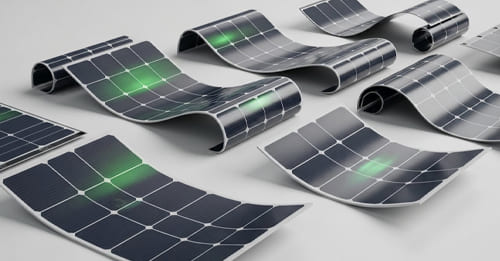
Solar energy in Pakistan is rapidly evolving. It is no longer limited to large rooftop systems; many consumers are curious about the general solar panel price in Pakistan, particularly as they look for portable, lightweight, bendable solutions. While rigid panels still reign supreme for grid use, flexible modules have proven increasingly popular for off-grid use, boats, RVs, and hybrid applications.
Feroze Power is at the forefront, guiding consumers to make informed choices when investing in flexible solar technology.
What are Flexible Solar Panels?
Flexible solar panels are a newer type of photovoltaic (PV) technology that can bend and curve to fit on uneven surfaces. Instead of being built on heavy glass and aluminum frames like traditional solar panels, they use thin layers of solar cells installed on flexible materials like plastic or steel.
This makes them lighter, thinner and easier to install. Most can flex up to around 30 degrees, making them ideal for curved surfaces such as caravan roofs, boats or off-grid cabins. Flexible panels are usually between 0.1mm and 1mm thick and weigh about 80 per cent less than rigid panels.
Now that we know how they work, let’s look at the Flexible Solar Panel Price in Pakistan in 2025.
Flexible Solar Panel Price in Pakistan: What to Expect in 2025
The cost of flexible solar panels in Pakistan is influenced by the panel’s wattage, the quality of the materials (like ETFE coating), and whether the brand is local or imported/premium. Here is a breakdown of the typical price ranges and their respective applications:
100 W Flexible Panels
Price Range: PKR 12,000 – 18,000
- Ideal for curved rooftops, RVs, and boat installations
- Recommended for light off-grid solutions
150 W Flexible Panels
Price Range: PKR 18,000 – 26,000
- Fills the gap between 100 W and 200 W systems
- Suitable for slightly larger mobile or semi-permanent setups
200 W Flexible Panels
Price Range: ~ PKR 30,000 – 45,000
- Popular option for small hybrid systems
- Can support a compact off-grid home or cabin setup
300 W Flexible Monocrystalline Panels
Price Range: ~ PKR 20,000 – 50,000
- Good for higher efficiency needs with limited space
- Supports small commercial setups or hybrid builds
With prices in mind, it’s important to know which brands deliver quality, efficiency, and long-term value to consumers.
Popular Brands & Their Flexible Panel Offerings
A few of the popular brands of flexible solar panels currently operating in or importing to Pakistan are:
- Renogy: Reliable and commonly used in mobile systems.
- SunPower: High-efficiency flexible panels.
- HQST: More cost-effective alternative.
- Allpowers: Durable and widely used with portable solar kits.
- Hi Power Solar (local): Offers flexible models in Pakistan, including a 150W version priced in line with the general market range of PKR 18,000–26,000.
Features & Warranty for Flexible Solar Panels
To make a clearer comparison, here’s a summary of key features, efficiency, and warranty of each flexible panel brand.
Brand | Key Feature | Efficiency | Warranty | Recommended Use |
Renogy | Portable & Reliable | Up to 22% | 5–10 years | Mobile setups, off-grid systems |
SunPower | Premium High Efficiency | Up to 24% | 10–25 years | Curved rooftops, hybrid systems |
HQST | Budget-Friendly | 18–20% | 5–10 years | Small portable kits, RVs, boats |
Allpowers | Durable & Lightweight | 19–21% | 5–8 years | Portable solar kits, emergency use |
Hi Power Solar | Local Affordable Option | 17–19% | 5 years | Small rooftop or DIY off-grid systems |
Selecting the correct panel will allow you to strike a balance of costs, performance, and durability for your specific setup.
Pros & Cons of Flexible Solar Panels
While flexible modules lack the durability and output consistency of the Best Solar Panels in Pakistan, they stand out in terms of portability and installation economy.
Advantages:
- Lightweight and portable
- Can be mounted on curved or uneven surfaces
- Easier installation; less structural support needed
- Good for mobile or off-grid setups (camping, RVs, boats)
Drawbacks:
- Higher cost per watt compared to rigid panels
- Lower longevity; many last 5–10 years, vs 20+ for rigid panels
- Efficiency is typically lower or more variable
Buying Tips from Feroze Power
The following are some of the buying tips by Feroze Power to guide you in making an informed purchase.
- Match Your Requirements: Smaller flexible panels (100-200W) are suitable for mobile or curved surface use.
- Check the Specs: Find IP rating, efficiency and power output.
- Select the Right Brand: Premium brands will perform better, and local brands could be better in terms of price.
- Think Long-Term: Flexible panels can wear out more quickly, so make sure your design considers potential replacements.
- Check Compatibility: Make sure that your inverter is compatible with the type of panel you have, particularly when making a combination with an already existing fixed panel or preparing for future net metering possibilities.
The long-term success of your solar investment depends on matching the panel to the task, confirming specifications, and ensuring system-wide compatibility.
Final Thoughts
If portability, design flexibility, or curved installations are important to you, flexible solar panels may be an attractive option, even with a higher price tag. For long-term net metering systems, large fixed systems generally remain more cost-effective, but for specific use cases sourced through a reliable solar company like Feroze Power, the current flexible solar panel price in Pakistan has become more reasonable in recent years.
Faqs
Q1. What is a flexible solar panel?
Flexible solar panels are lightweight, bendable PV modules comprising thin-film or flexible mono-silicon material, ideal for curved or portable installations.
Q2. Why is the flexible solar panel price in Pakistan higher per watt than rigid panels?
They are imported and made of specialized materials. In addition, their flexible design and portability add to the cost.
Q3. Can flexible panels be used for net metering?
Yes, but they’re more commonly used in off-grid setups. You also have to make sure that your inverter is NEPRA-approved in case you intend to use net metering.