


Net Metering in Karachi: What Solar Customers Need to Know
Net Metering in Karachi, also called Net Energy Metering (NEM), provides the facility of selling the extra energy back into the grid and decreasing the bills. This has been a major contributing factor in the increased use of solar power in the country.
As the use of distributed solar continues to increase, utilities are changing various rules related to crediting, billing, and the benefits of the exported energy. This information is important for those considering the use of Residential Solutions or Commercial Solar Solutions.
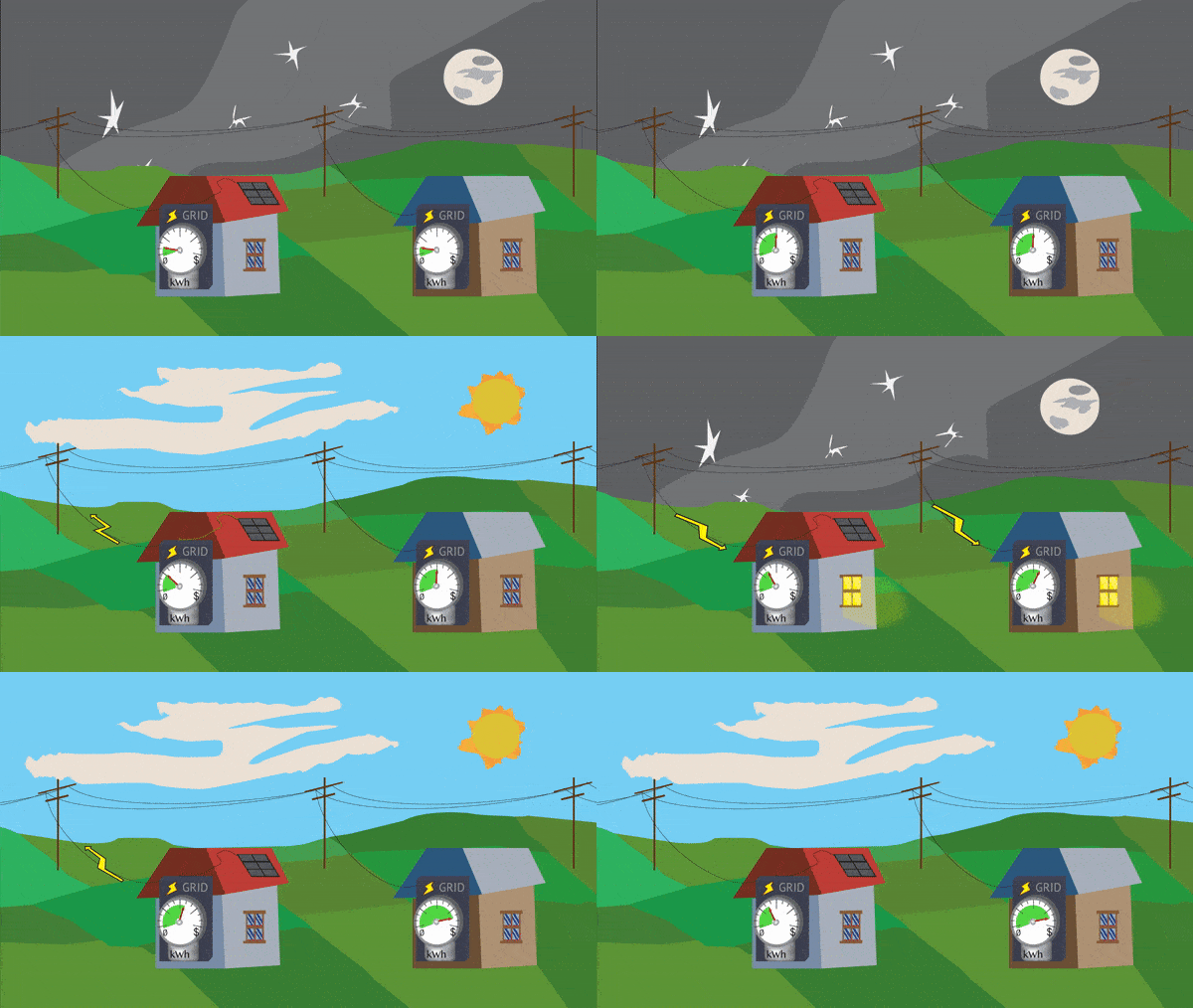
How Traditional Net Metering Works
With conventional net metering:
- Customers are charged based on net consumption over a billing period.
- Customers will have their bills reduced to near zero as daytime solar production will offset nighttime or off-peak consumption.
- The amount exported to the grid is usually credited at the same rate as the amount imported.
- Credits have no expiry date and will carry over to future months.
- There are no fixed charges to prevent offsetting.
This is particularly advantageous to households and businesses with Battery Energy Storage Systems (BESS), where daytime energy will be stored and utilized later.
How Net Metering Policies Are Changing in Karachi
Changes to net metering generally fall into three main areas:
-
Credit Expiration
-
-
- Annual Credit Expiration means excess credits expire at the end of the billing year. Customers may receive compensation at wholesale electricity rates for any expired credits.
- Monthly Credit Expiration limits the ability to carry excess energy from high-production months to low-production months. This reduces potential savings for solar customers.
-
-
Fixed and Non-Bypassable Charges
-
-
- Many utilities apply fixed minimum bills that cannot be offset by solar production.
- Non-bypassable charges require customers to pay a portion of the bill regardless of solar generation. This can increase monthly bills by 10 to 35 dollars even for fully solar-powered households or businesses.
-
-
Value of Electricity Exported to the Grid
-
- Reduced Rates mean utilities may credit solar exports at 80 to 95 percent of retail rates, lowering the overall financial benefit.
- Flat Export Rates pay a fixed rate for exported energy regardless of usage tiers or time-of-use periods.
- Zero Export Rules prevent exporting electricity entirely in areas with high solar penetration. This encourages smaller systems or the use of on-site energy storage.
Practical Implications for Solar Customers
- For Residential Solutions, annual or monthly credit expiration may reduce long-term savings if excess energy cannot be banked.
- Businesses installing Commercial Solar Solutions should model bill reductions based on fixed charges and reduced export rates to forecast ROI accurately.
- Using Battery Energy Storage Systems (BESS) can help mitigate zero-export policies or credit expiration by storing excess energy for self-consumption.
- Solar Bank Financing can make the upfront cost of solar installations and storage solutions more manageable for homeowners and commercial customers.
Conclusion
Net metering in Karachi is changing. The traditional net metering policies are more flexible in crediting and offer substantial savings on bills, but the new regulations are imposing some constraints, such as the expiry of credits, the imposition of charges, and the reduced rates of export charges. It is important to strategically plan the solar solution by utilizing storage options, financing options, and solar system designs to achieve the best savings.
By gaining this insight, solar solution adopters can take the necessary steps to ensure the optimal performance of their industrial solutions as well.
Are you looking to optimize your solar system with the latest net metering policies in Karachi?